Your gut does more than just tell you something is a bad idea.

A bigger role it plays is in how certain microscopic residents within it determine your overall health: including your weight.
According to AAAS, every individual has something called the human microbiome, which consists of a community of microorganisms, called normal microbiota, that routinely grow on or within a healthy individual. Each person’s microbiome is unique, as different factors starting from birth to the different environment they grow up in affect the composition of the microbiome. Despite that, there are also some general similarities; in our guts, there are several microbiota that aid in multiple ways, including assisting in digestion and producing beneficial substances, such as vitamin K, for the body. Seeing the significant roles our gut bacteria had in our gastrointestinal system, a connection between the composition of our gut microbiome and obesity was hypothesized and tested.
The Connections Found Between Gut Microbes and Obesity
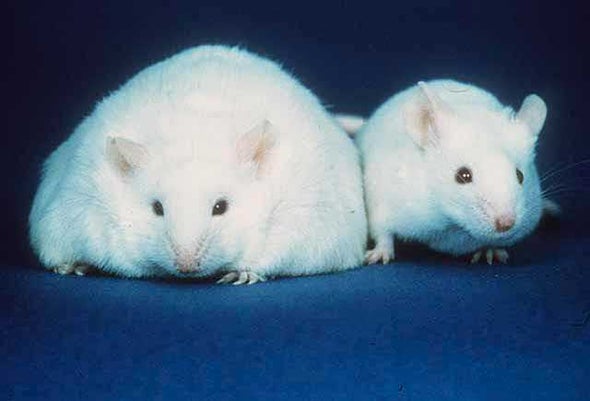
According to Springer Link, it was mentioned that one of the first tests that marked the beginning of research connecting gut microbiota and obesity was one that compared body fat between conventionally raised mice and germ-free mice. In the study, it was found that there was more body fat in the conventionally raised mice despite their slightly higher caloric diet, which suggests that the composition of one’s microbiome must play a significant enough role in determining what and how nutrients are processed and stored, which subsequently leads to how weight is retained and if obesity can be developed. Building off of that, another study followed after with observing different microbiomes in three different groups of mice; genetically obese, lean, and wild-type siblings (individuals in natural conditions); that followed the same polysaccharide-rich diet. Comparing the total body fat and microbiome composition across the three groups, it was discovered that a relative decrease in Bacteroidetes and an increase in Firmicutes was a characteristic of obesity. In order to further define a clear relationship between gut microbiome and obesity, the potential effect that genetic modification might have was addressed. Taking samples of lean and obese microbiome, each were separately transplanted into germ-free recipients, and total body fat was again observed and compared between the groups. As hypothesized, there was a “significantly greater increase in total body fat in mice colonized by obese microbiota than lean microbiota”. Since these monumental studies, several more have been made by the science community to further establish the discovery, consider exceptions, and even develop solutions to obesity using what these studies have suggested.
Probiotics as an Option to Combat Obesity

One such solution to Obesity that has been developed and explored is the use of probiotics, which, defined by MedicineNet, are “live microorganisms (usually bacteria) that are similar to beneficial microorganisms found in the human gut that are taken as dietary supplements or found in foods”. MedicineNet also makes note that the International Scientific Association for Probiotics and Prebiotics (ISAPP) further specifies probiotics as “live organisms that, where administered inadequate amounts, confer a health benefit on the host”.
Which makes sense.
Now, if we analyzed the line of thought that led to the probiotic solution, it feels like it was the most obvious conclusion to reach. Particularly in the case of obesity, it was the first time that a connection was explored between intestinal microbiota and overall health. Then, several studies later, not only was it discovered that indeed, a lean microbiome was different from an obese microbiome, it was also established that manually altering the microbiome led to changes in overall health: positively, transplanting microbiota from a lean microbiome into germ-free mice led to lean mice. Sivamaruthi et al. study was one of the many that started to piece together a probiotic solution built off of the discoveries made on the relationship between gut microbiota and obesity. According to Hindawi, Sivamaruthi et al. notes a study conducted where the experimental group was fed a calorie restricted diet supplemented with cheese containing probiotic (Lactobacillus plantarum) and the control group was fed a calorie restricted diet supplemented with control cheese. The results from that study showed that after three weeks, there was significantly reduced body mass index and hypertension in the experimental group than the control group, and thus suggested that the health improvement could be attributed to the probiotic cheese in the experimental group. With this and several other successful experiments pointing towards a significant impact probiotics had in combating obesity (amongst a multitude of other health benefits), the practice of seeking out foods or taking supplements containing those same “good bacteria” grew in popularity. Also due to the fact that what you are putting into your body is something that can be found naturally within an individual, it took out the fear of artificiality that a lot of medications or procedures give to people.
Big Picture
In the long run, this field of study feels extremely promising. For the time being, the concept of using something so natural to your body to cure or alleviate certain ailments seems like it can avoid some of the controversy that surrounds most western medicine. For the future, I don’t doubt that experiments exploring the idea of genetically modified gut microbiota will come up and branch into its own thing. However the direction this field goes, I look forward to hearing about the never ending discoveries for many years to come.

 The Magic Struggle Bus