
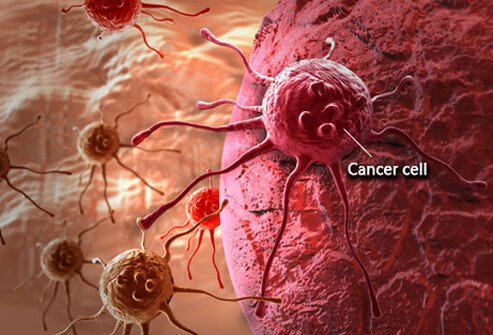
In the world of medicine today, we have come a long way in terms of finding treatment and then finding a variety of different treatment options. T cell and dendritic cell therapy are some of the newer options that are being explored right now, and both of which use the cells of our own body to treat infection and disease.
Dendritic Cell Therapy
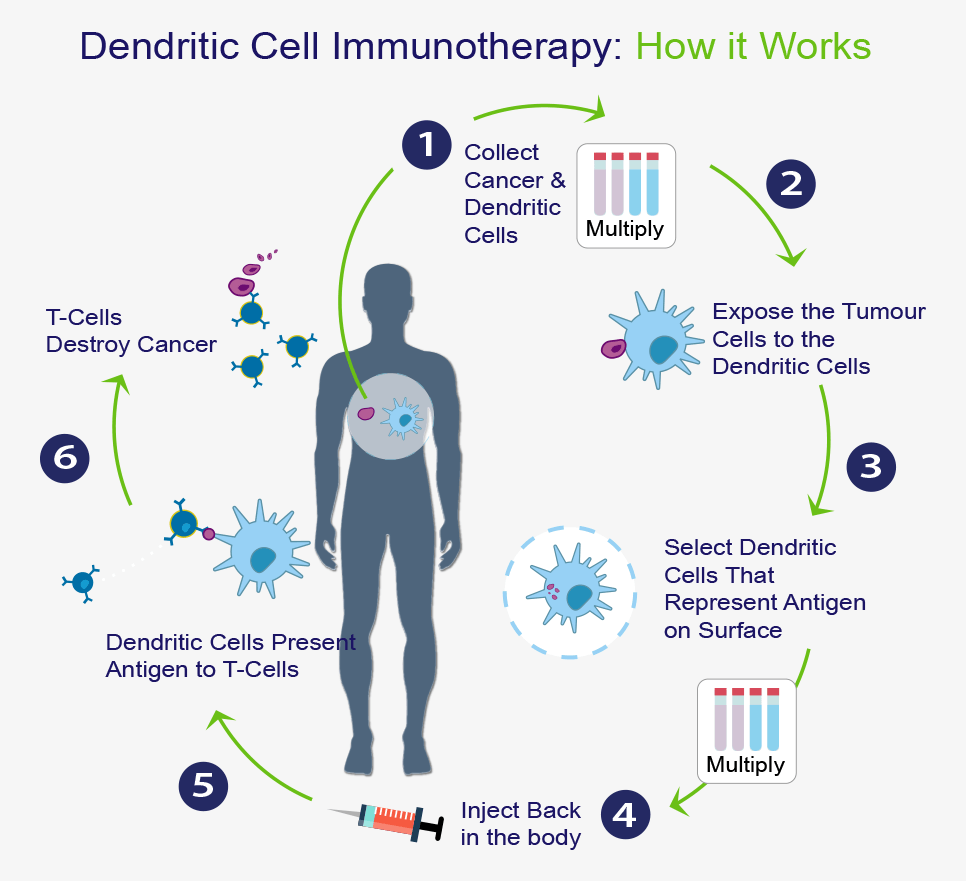
Firstly, what are dendritic cells? According to Infusio, dendritic cells are white blood cells that can be found in the bloodstream, and they function as antigen-presenting cells. Their role as antigen-presenting cells is to identify threats that the body’s immune system needs to respond to, process the antigen material from said threat, and then present that information on the cell surface for T cells of the immune system to recognize and kill. In dendritic cell therapy, the idea is to concentrate a patient’s dendritic cells, sensitize them to their specific disease (typically cancer), and then reintroduce those cells into their system so that the “trained” cells can boost the body’s capacity to fight off the disease. This kind of cell therapy is considered “personalized medicine”, because the goal is to have the patient’s own enhanced/boosted self-immunity battle the specific disease that they have. In other words, it is considered a “tailored treatment vaccine”.
CAR T-Cell Therapy
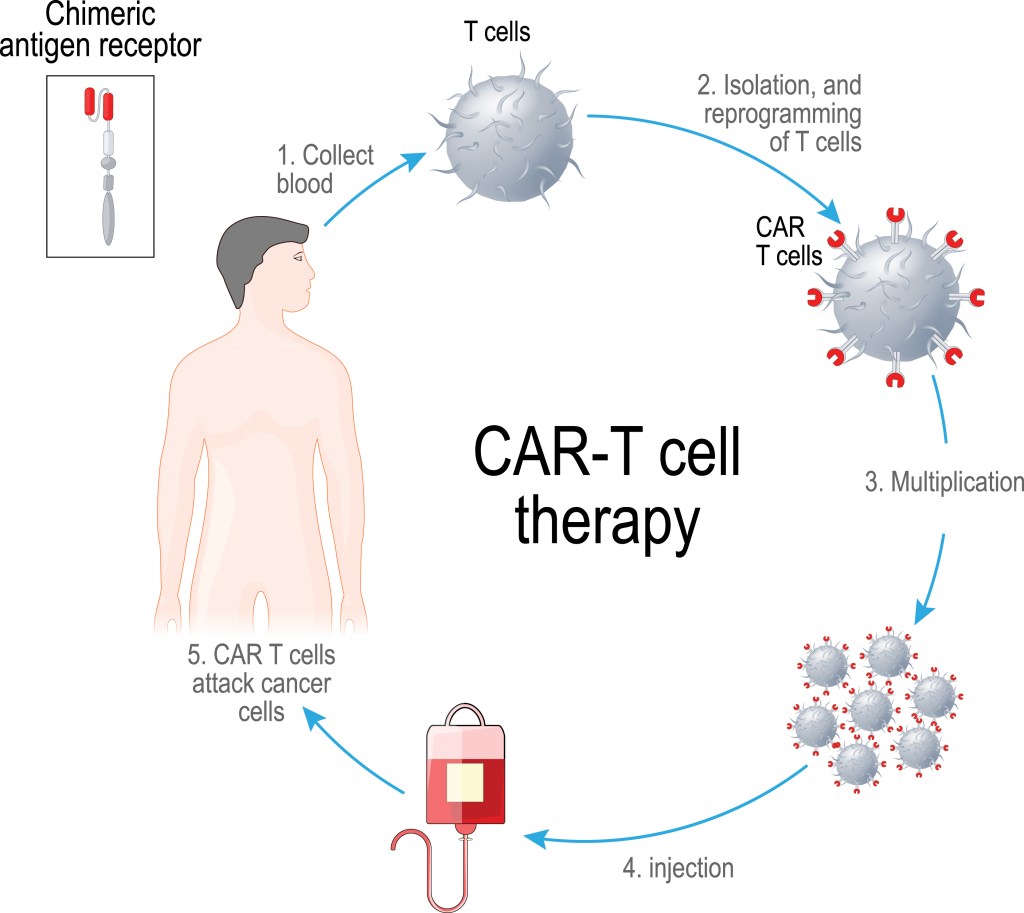
CAR T-cell therapy works similarly to dendritic cell therapy in that it also uses a patient’s own immune system cells to fight against disease, but T-cells are different from dendritic cells. T-cells are another type of white blood cell, but they function specifically in adaptive immunity. According to ASU: Ask A Biologist, T-cells have receptors that cover their surfaces; when the specific antigen binds to these receptors, a helper T-cell will coordinate the attack on the cell, and a killer T-cell will release cytotoxins to kill that cell. According to the Dana-Farber Cancer Institute, CAR T-cell therapy uses specially lab engineered T cells that sprout special structures called chimeric antigen receptors. When these CAR T-cells are later re-injected into the patient, the goal is for these new chimeric antigen receptors to help the T cells identify and attack infected cells (typically cancerous) throughout the body, because now they have a new ability to target a specific protein.
Cell Therapy in Cancer

In most cases, both dendritic cell therapy and CAR T-cell therapy are immunotherapy methods directed towards cancer treatment. With dendritic cell based vaccines in particular, Hindawi notes that there have been promising results already with its use in several cancers such as melanoma, prostate, and lung cancers. Seeing these results, a research study on Hindawi explored the same implications on ovarian epithelial carcinoma. Specifically, they used autologous dendritic cells loaded with ovarian-associated antigens, and these were able to stimulate the proliferation of autologous T cells and to induce tumor-specific cytotoxic activity. According to this research study on Hindawi, the combination of using this dendritic cell therapy treatment with antiangiogenic monoclonal antibodies increased the clinical efficiency of the therapy, and it induced a 2-year prolonged survival of the treated patients as well.
With years and years of research dedicated to treating cancer, we’ve gotten significantly far in our efforts, but unfortunately it is still not far enough; the current treatment options are still not ideal (painful, dangerous side effects, etc,), and sometimes they are still ineffective. This personalized medicine kind of cell therapy is one of the newer methods that we have been exploring, and although it is meant to be a complement therapy alongside other more aggressive treatments, hopefully it can be developed to the extent of being the main source of treatment. In the end, using as much of what our bodies produce naturally is much better than putting patients through multiple chemicals or exposure to radiation.

 The Magic Struggle Bus